


SJD Barcelona Children's Hospital consolidates a professional community focused on integrating patient experience into healthcare
After three successful editions, Patient Experience: Design and Innovation, opens registration for its fourth edition, which will run from 1st October to 22nd January, consolidating a training proposal with steadily growing participation.
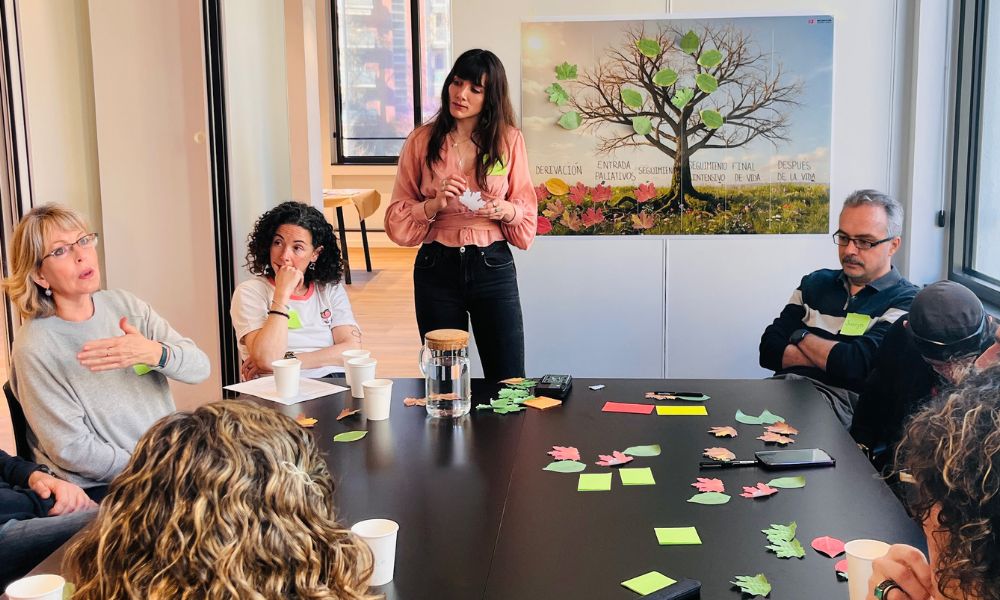
The training programme Patient Experience: Design and Innovation, promoted by Hospital Sant Joan de Déu Barcelona in collaboration with the Beryl Institute, has already trained nearly 300 professionals across its first three editions. The programme has helped consolidate a professional community committed to the structural integration of the patient’s voice and experience into the improvement of healthcare, connecting the practice developed at the hospital with globally recognised conceptual frameworks and resources.
Professional diversity to integrate the patient voice
The initiative, led by SJD Barcelona Children's Hospital’s Patient Experience team with the aim of sharing tools, insights and working models developed within the organisation, reflects the sector’s growing interest in adopting methodologies that support more person-centred care.
Since its launch in January 2025, the course has trained nearly three hundred professionals interested in applying patient experience methodologies in their organisations. Beyond the high level of participation, the diversity of professional backgrounds represented in the programme stands out: clinicians, quality and patient experience leads, innovation teams, healthcare executives and managers, as well as professionals connected to the social and scientific fields.
This diversity highlights that patient experience is not limited to the clinical sphere, but rather requires a cross-cutting approach that integrates care delivery, organisational, creative and strategic dimensions within healthcare institutions. In the words of Joan Vinyets, Head of Patient Experience at SJD Barcelona Children's Hospital and programme director, “the sector’s response confirms that education in patient experience calls for a cross-disciplinary approach that goes beyond a purely clinical or managerial perspective.”
This professional diversity is further enriched by the participation of professionals from different organisations and countries, fostering a shared learning environment across a variety of organisational contexts. The exchange of experiences helps address, from complementary perspectives, how to embed the patient voice structurally both in the improvement of care processes and in decision-making.

A methodology designed for practical application
One of the programme’s distinguishing features is its pedagogical approach. The course has been collaboratively designed and developed with the specialised e-learning team at SJD Formación, incorporating tools, learning dynamics and teaching resources aimed at delivering a structured, agile and practice-oriented learning experience.
The training proposal combines content organised into short, accessible modules, clear learning pathways and progress tracking, together with real cases and experiences linked to clinical practice. Each module presents an applied challenge based on situations that may arise in any healthcare organisation, requiring participants to use the tools introduced in the course to analyse specific issues and propose solutions from a patient experience perspective.
According to Joan Vinyets, one of the aspects most highly valued by participants is precisely the programme’s applied nature: “participants highlight the broad and practical perspective offered by the course, as well as the opportunity to apply knowledge to real challenges, learn about best practices and access knowledge and evidence through collaboration with the Beryl Institute”.
This approach strengthens the direct transfer of learning into professional settings, helping ensure that the knowledge acquired translates into projects and initiatives that support organisational improvement.
Sharing knowledge to generate impact
Beyond participation figures, the course has become a meeting point for professionals seeking to advance towards more participatory models of care focused on the value perceived by patients and families. Demand identified across the first three editions also highlights the need to expand the training offer in order to explore specific areas in greater depth, such as qualitative and quantitative research, co-creation methodologies and the evaluation of patient experience.
As Joan Vinyets notes, “implementing patient experience within each organisation does not follow a single formula, but rather requires assessing the specific context of each institution in order to define the most appropriate actions.” Based on this analysis, professionals can promote initiatives such as the systematic integration of the patient voice, the development of pilot projects or internal awareness-raising actions that help embed this approach within their teams.
The fourth edition of the course will continue to strengthen this community of professionals committed to transforming person-centred care.